

Dancing
Trust a Leader Who Can Lead (Part II)
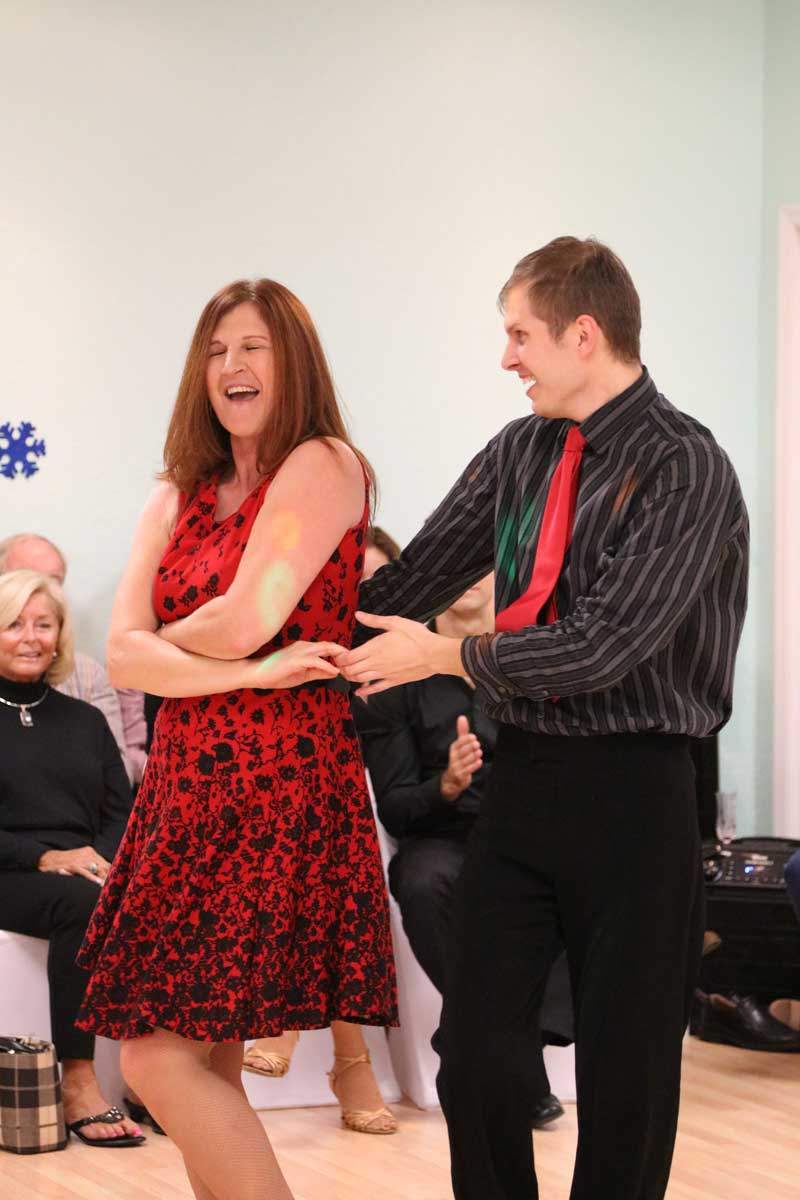
This post follows our previous one, which outlined the fundamentals of how to follow for beginners. Here we do something similar, with an emphasis on the interaction with your partner.
Staying on Time
Sometimes you’re dancing on beat, sometimes you’re 50-50, and sometimes you’re in your own world dancing to an “amazing” rhythm no one else can hear. Sound familiar? If you and your partner are both true beginners, it takes time to develop rhythm recognition. Even when it’s challenging, follow your partner along as best you can.
A little theory. What does it mean to be “on time,” on the “right beat”? Most songs are in 4- or 8-beat measures; only waltz songs are in 1-2-3. So to stay on time, first recognize the music: is it a 4-beat or a 3-beat song? Listen. Count. Tap with your hand or your leg, or snap your fingers. Make a sound and match it to the music. Try a different song and repeat. Once you can find the beat more easily, start marching on the beat so your body can feel the beat in motion.
Practice is the key, patience is your friend, feeling is the magic. If you’re a beginner or advanced dancer, stay on time. No matter the style, staying on time is one of the most important things you can do. (And if your partner is offbeat, don’t do them any “favors”; stay on time, and they’ll match you sooner or later. Be patient and polite.)
Maintaining the Connection
So you’ve mastered the footwork and have spot-on timing, but for some reason nobody seems to guide you properly on the dance floor. Why can’t they move with you the way your instructor does? Because your instructor always establishes proper frame and pressure before moving. Put into an equation:
Frame + Pressure = Connection
- The frame is the positioning of your arms and body, which creates room for you both to dance.
- Pressure is a light but active compression you apply to your partner’s frame through the palms of your hands. If you aren’t responding fast enough to a lead, tune your arms and body up or down. Find the “gold” middle.
Together these create the connection, which is where the joy of partner dancing comes from, moving together in unity.
As both posts are meant to imply, the most difficult thing to master in ballroom, or any partner dancing, is not the steps. It’s the interaction with your partner. Two people dancing in close contact can’t move seamlessly if each makes their own decisions; they must coordinate perfectly, and the only way to do that is for one person to direct the moves and the other to follow.
Dancing is a conversation without words.
Dance Passion Team